• +91-9302-214-784
  • ceo@wetpointcoolingtowers.com
  • Ganga Malanpur, Gwalior, Madhya Pradesh 474010

Fills

Home / Fans

Cooling Tower Spares

FANS

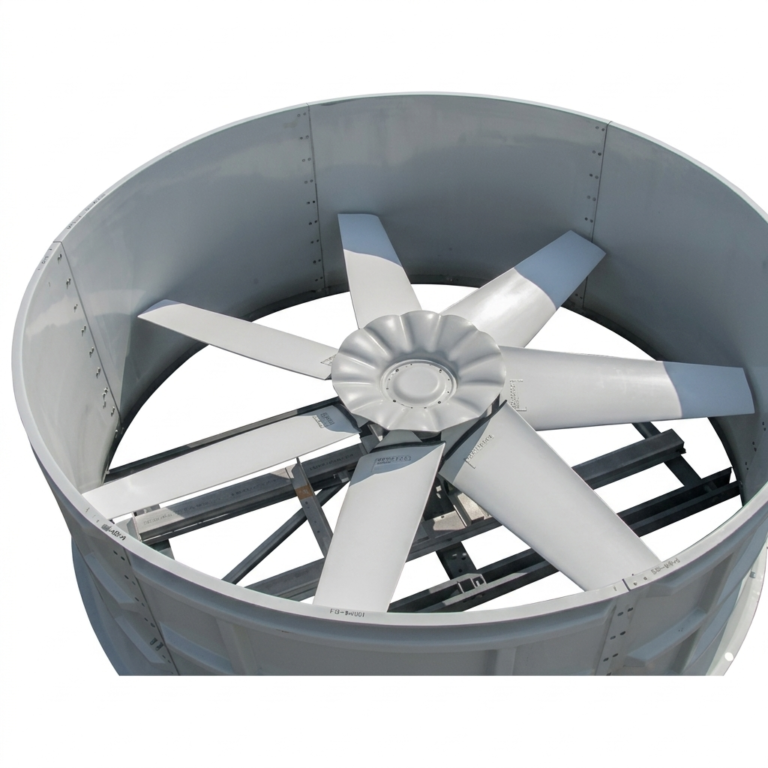
Cooling tower fans are one of the most critical components responsible for creating and maintaining the airflow required for effective heat rejection. In mechanical draft cooling towers, fans play a vital role in drawing or forcing large volumes of air through the fill media, enabling rapid evaporation and efficient cooling of hot water.

Cooling tower fans move massive air volumes at low pressure. The fan type depends on tower design, noise limits, and efficiency needs.

By Airflow Direction

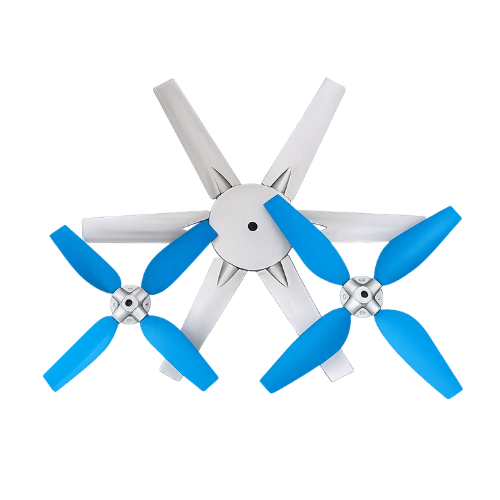
1. Axial fans:

  • Air moves parallel to the shaft. Like an airplane propeller.
  • Used in: 95% of induced draft and forced draft towers
  • Pros: High volume, low pressure, cheap, compact
  • Cons: Noisy at blade tips, efficiency drops if pressure is high
  • Typical static pressure: 50-250 Pa

2. Centrifugal fans:

  • This is what you’ll see most.
    Fan Type Blades Diameter Noise Best For
  • Used in: Small packaged towers, forced draft where ducting is needed
  • Pros: Handles higher pressure, quieter, good with ductwork
  • Cons: Lower volume, bigger, more expensive, uses more power
  • Typical static pressure: 250-750 Pa

Axial Fan Variations

  • This is what you’ll see most.
    Fan Type Blades Diameter Noise Best For
  • Fixed pitch: Molded plastic/FRP, 4-8 blades 0.6m – 3m Moderate Small HVAC towers, constant speed
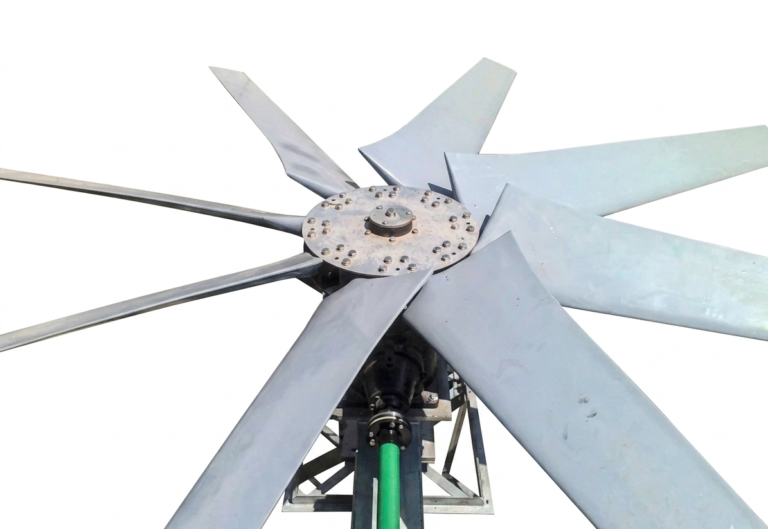
  • Adjustable pitch: FRP/Aluminum, 4-12 blades 1.5m – 9m Moderate Large towers, pitch set once for duty
  • Variable pitch: FRP/Aluminum, 6-12 blades 3m – 12m+ Lower tip speed possible Energy savings, varying load
  • Low-noise: Wide chord, swept blades, 6-12 1.5m – 9m 5-15 dBA lower Hospitals, residential areas

Drive Types

  • How the motor turns the fan.
  • 1. Direct drive: Motor directly on fan shaft.
    – Pros: No belts, no gearbox losses, low maintenance
    – Cons: Needs slow-speed motor, limited to smaller fans <2.5m
  • 2. Belt drive: Motor + pulleys + belts to fan.
    – Pros: Cheap, easy speed change, vibration isolation
    – Cons: Belt wear, 3-5% power loss, needs tensioning
  • 3. Gear drive: Motor + right-angle gearbox to fan.
    – Pros: Handles huge fans 3m-12m+, 95-97% efficient
    – Cons: Oil changes, noise, expensive, needs alignment
  • 4. VFD/EC motor: Variable speed on any drive above.
    – Pros: Huge energy savings at part load. Fan laws mean 50% speed = 12.5% power
    – Cons: Higher upfront cost, harmonics

Quick Selection

  • Situation, Fan + Drive
  • Small HVAC tower, Axial, fixed pitch, belt drive
  • Large industrial, constant, Axial, adjustable pitch, gear drive
  • Noise sensitive Axial, low-noise wide chord, VFD
  • High static, ducted, Centrifugal, belt drive
  • Best energy savings Axial, VFD on gear or direct drive
  • Fan laws to remember: Flow ∝ speed, Pressure ∝ speed², Power ∝ speed³. Dropping speed 20% cuts power almost 50%.
  • Dealing with noise complaints or high power bills? Fan type and VFD are usually the levers.